Adobe Flash Player Update For Mac Not Working
With the latest update on the Adobe Flash Player, new features and bug fixes were included and the developers saw to it that the released version will work on multi operating systems, including Linux, Mac and Windows.
Downloading the updated version is relatively easy via the website of Adobe and by following the instructions given. While the version is available for several OS platforms, the web browsers differ. In the case of Windows 10, the browser is known as Microsoft Edge. This browser replaced Internet explorer and came pre-installed with Windows 10 and Windows 10 Mobile, Xbox One and Windows Server 2016.
- Adobe Flash Player for Mac lets you access Flash content in Web sites when using browsers like OS X's Safari. The plug-in integrates seamlessly and through a.
- All you have to do is to be careful and don’t trust the automatic updates. How to update Flash Player on Mac (if it’s already installed) Instead of downloading anything from a popup, follow simple steps to check whether you really need to update Adobe Flash on Mac. Go to the Apple menu and click System Preferences. In the bottom left corner, choose Flash Player. Choose the Updates tab.
- The solution you gave me did not work. I reinstalled the flash player, restarted the computer, and then I down loaded the uninstall program. I again closed all browsers and uninstalled the player. I then reinstalled the player and restarted the computer, and the flash player is not found in my applications folder, and is again not working.
Jan 19, 2011 Flash Player, Mac OS X not working in Firefox, After Updating Firefox and Flash, Works in Safari DolphinCS5 Jan 18, 2011 5:05 PM Every time I update Firefox I lose Flash capabillity. This wikiHow teaches you how to update Adobe Flash Player on your Windows, Mac, or Linux computer. While Adobe Flash Player will usually update itself automatically if you installed it with default settings, you can force it to check for and install an update if one is available. Adobe Pepper Flash Player is a cross-platform, browser-based application runtime that provides uncompromised viewing of expressive applications, content, and videos across browsers and operating systems. Pepper Flash plugin is built for Chromium-based browsers, i.e. Chrome, Opera, Chromium etc.
Since Flash Player is already integrated in the operating system, user just has to enable it in Microsoft Edge. By doing so, it is possible to watch animation, play games and open rich content with the Flash Player platform.
To go to the Edge Menu, simply click the “…” button. Next, select the “Settings” menu. Search for the “Advanced Settings” option and click on the button that says, “View advanced settings” menu. Under the Advanced Settings window, search for choice that says “Use Adobe Flash Player” and turn the toggle switch to “on” to enable Adobe Flash Player.
However, Windows 10 users who are looking forward to enjoying the features of Adobe Flash Player might be surprised to know that doing so will not be automatic as expected. A few days ago, the developers of Microsoft Edge announced that the content of Flash Player will be blocked by default.
While users can still enjoy viewing Flash Player content on the Microsoft Edge browser, the freeware needs to be enabled each time. Despite blocking the application from the web browser, users can still have the option to manually enable Flash Player if they want to.
According to Microsoft, this move was part of their plan to encourage users to use HTML5 alternatives with the transition being easier by giving people the option to enable Adobe Flash Player if they need to watch Flash content. Microsoft prefers HTML5 since it is more secure and does not consume much battery. This is also in line with their aim to allow user experience to grow, thus, Microsoft Edge will ditch Adobe Flash Player in Windows 10 Creator’s update set for 2017.
Every techie needs a pair of sick headphones. Neurogadget recommends these Audio Technica Professional Studio Monitor Headphones for both their quality and their cool-factor.
Got a message that says you have to update Flash Player on Mac? Don’t promptly click the update button. If you are not careful, you can accidentally install adware or malware instead of Flash Player. And that’s not what you need, right?
In this article we’ll show you the best way to check for Flash updates and also give you a comprehensive guide to update Adobe Flash Player for Mac safely. Plus, we’ll tell you how to uninstall it from your computer completely.
What is Flash Player?
For years, Adobe Flash Player has been one of the most popular plug-ins used by web browsers to reproduce videos, web ads, and interactive animations. But now its position is rocked by some security concerns and safer alternative solutions.
Google Chrome and Firefox contain the built-in version of Flash running in the sandboxed mode. This method is safer than running Flash as a plugin. What about Safari, it disables Flash Player by default starting from macOS Sierra. The point is that Apple wants you running on HTML5 — the newer and safer way of browsing the web. It supports the same multimedia elements as Flash but without any security issues.
However, the reality is that you still may need the Adobe Flash Player on your Mac. Many websites will not work if you uninstall it completely. Live streams like BT Sport can only be delivered in Flash, so if you are the BT Sport customer, you’ll want to keep the Flash Player. In addition, a great number of gaming and education sites use Flash and until they implement the HTML5 standards, you’ll need the Flash Player.
Why watch out for Flash updates on Mac?
Adobe is always trying to push its technology further and release the Flash updates to enhance the user experience and security. However, attackers still find the ways to trick you into downloading adware and malware through the popups. That’s why you should know how to protect your Mac against the malicious attacks when you’re trying to update your Adobe Flash for Mac.
Fortunately, it’s easy to make sure that you are installing the real Flash for Mac and are not exposed to the vulnerable software. All you have to do is to be careful and don’t trust the automatic updates.
How to update Flash Player on Mac (if it’s already installed)
Instead of downloading anything from a popup, follow simple steps to check whether you really need to update Adobe Flash on Mac.
Go to the Apple menu and click System Preferences.
In the bottom left corner, choose Flash Player.
Choose the Updates tab.
Click the Check Now button.
If an update is available, click Yes to update. If no updates are available, you have the latest version of a Flash Player for Mac installed.
Easy enough, right? Make sure to invest some time and check if you do need to update Flash. Otherwise, downloading a false software package may harm your computer.
How to install Flash on your Mac safely
If Flash is not installed, which is by default on all new Macs, here’s a step-by-step guide to install it safely.
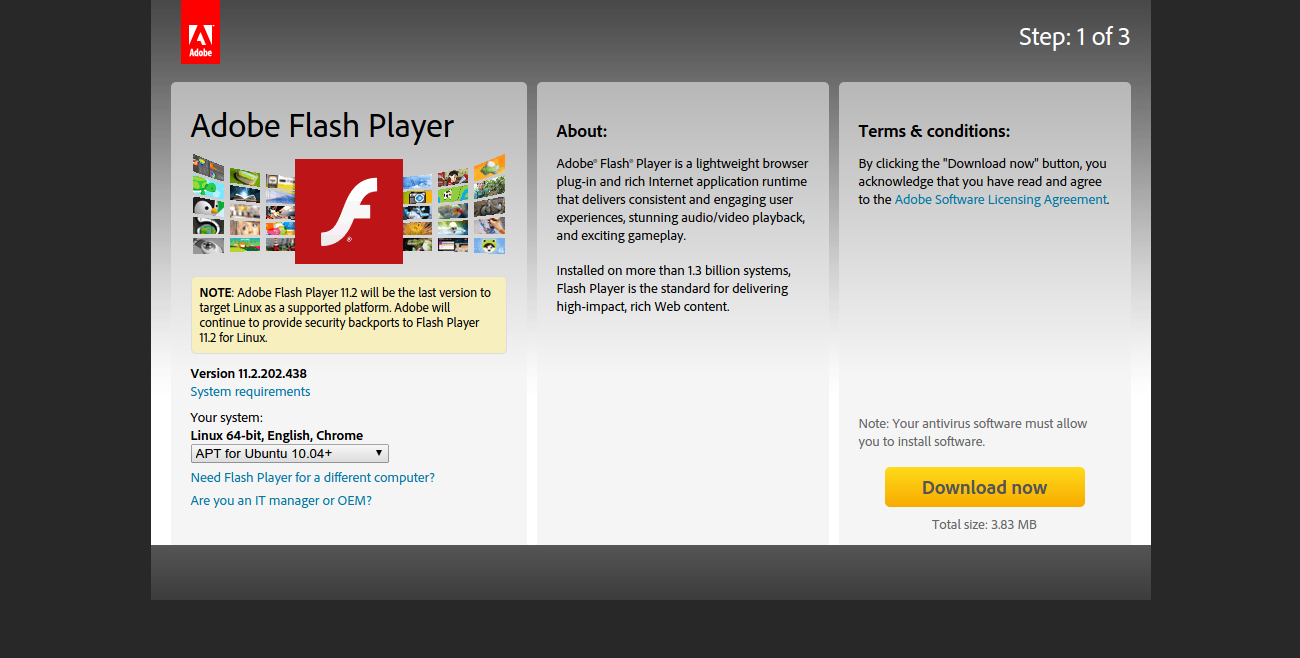
Visit the Adobe Flash Player page.
Click the Download now button.
The installer will download to your computer. If you’re using Safari, the file will go to your Downloads folder. If you’re using another browser, it may ask where to save the file.
Open your Downloads folder and find the .dmg installer file.
Double-click the Install Adobe Flash Player file.
You will be asked if you really want to install Adobe Flash Player. Read the message carefully to make sure that it’s the file you just downloaded. Click Open to proceed.
7. Agree to terms and conditions by clicking a checkbox.
8. Click the Install button.
9. In the window that appears, type your username and password.
10. Click the Install Helper button.
11. Click Allow Adobe to install updates (recommended). Adobe flash player.
12. Click Done.
That’s it. It’s also recommended to relaunch your web browser after installing Flash.
How to uninstall Flash completely
If you’re concerned about the security flows associated with your Adobe Flash Player, we’ll show you how to uninstall it from your Mac.
Usually, uninstalling Flash can cause a bit of headache. But with CleanMyMac X, you can remove Adobe Flash Player in a few clicks. Just follow these simple steps:
Adobe Flash Player For Mac
Download CleanMyMac X and launch it. Adobe flash player version 11.1.0 for mac.
Go to the Extensions in the sidebar.
Click Preferences Panes and then checkmark Flash Player.
Click the Remove button.
Adobe Flash Player Osx
As you see, uninstalling Flash with CleanMyMac X is as easy as pie. Moreover, the whole process won’t take more than five minutes. Try it out to uninstall Flash Player on Mac completely.
That’s it! Follow the tips above and don’t let the tricky popups and websites take advantage of you. This way you’ll stay up-to-date safely.